

Concrete Works That Hold Up on Site
- shaun3724
- 1 day ago
- 6 min read
A concrete slab that cracks early, a driveway that ponds water, or a footing poured onto poor ground can turn a straightforward build into an expensive rework. Good concrete works are not just about getting concrete into the ground. They depend on planning, excavation, drainage, levels, reinforcement, access and timing all lining up before the pour starts.
For property owners, builders and developers, that matters because concrete usually sits at the centre of the job. It supports structures, carries traffic and locks in levels across the site. When it is done properly, the rest of the project moves with fewer delays. When it is rushed or poorly prepared, defects tend to show up later, when they cost more to fix.
What concrete works actually cover
Concrete works can mean different things depending on the project. On a residential build, it may include house slabs, footings, driveways, pathways, kerbs and small retaining elements. On a rural or civil site, it may extend to hardstands, shed slabs, culverts, crossover works, equipment pads and structural elements that need tighter control over levels, load capacity and drainage.
That range is why one-size-fits-all pricing or programming rarely works. A simple driveway on stable ground is a very different job from a slab on a cut-and-fill site, or a hardstand that needs to cope with machinery traffic. The finish might look similar once it is complete, but the work underneath is where the difference sits.
Why site preparation matters in concrete works
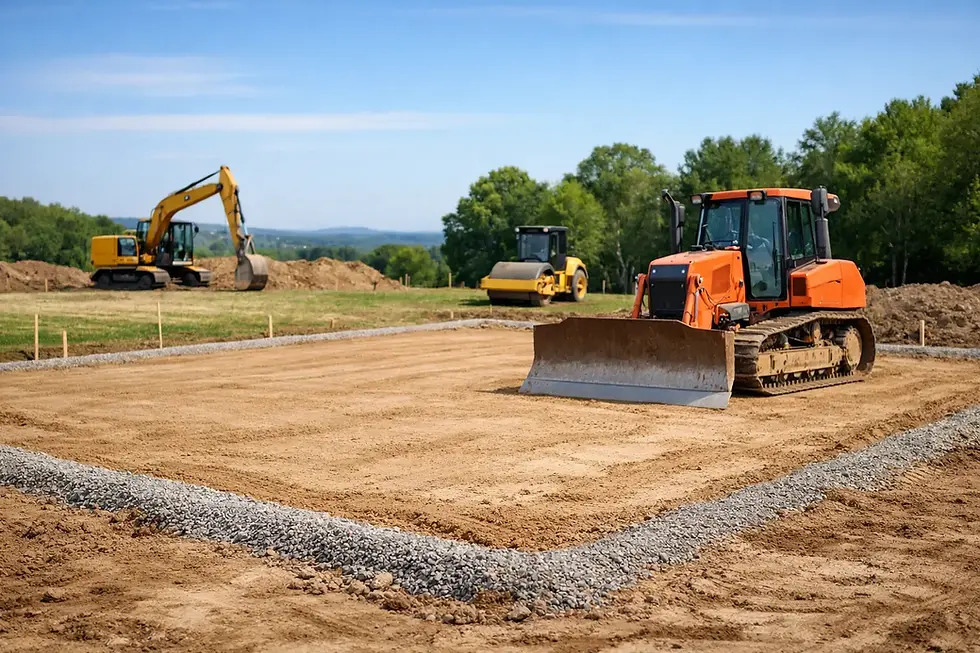
Most concrete problems start before the truck arrives. The ground has to be stable, properly trimmed and prepared to suit the design. If the subgrade is soft, reactive or uneven, the slab or pavement above it is already at risk.
This is where experience across excavation and site preparation makes a real difference. A contractor who understands earthworks, drainage and compaction can pick up issues early, before they affect the pour. That might mean undercutting poor material, bringing in suitable fill, compacting in layers, adjusting levels or improving water run-off around the area.
Drainage also needs attention from the start. Concrete does not fail in isolation. Water sitting under a slab, tracking along edges or washing out support around a driveway will shorten its life. Getting falls, spoon drains, pits or discharge points right is part of the concrete job, even if it is not the visible part.
Levels, access and sequencing
Levels are not just a set-out issue. They affect how water moves, how adjoining surfaces connect and whether the finished concrete works properly with the rest of the build. A driveway that ties into the road badly, a shed slab that sits too low, or a path that sends water back toward a structure can create ongoing problems.
Access is another practical point that often gets overlooked. The crew needs room for excavation, formwork, steel fixing and the pour itself. On tighter blocks or live sites, access can affect machinery choice, programme and labour. If that is considered early, the work tends to run faster and with fewer surprises.
The stages that affect quality
Good concrete works come from a chain of decisions, not one moment on pour day. Excavation, trimming, base preparation, formwork, reinforcement, set-out and curing all matter. If one of those stages is compromised, the finish may still look acceptable at handover, but performance over time can suffer.
Formwork needs to be stable and accurate so edges, thickness and falls are consistent. Reinforcement has to be placed correctly and supported properly, not left sitting where it ends up doing very little. Thickness and cover need to match the intended use of the slab or pavement. A domestic pathway and an access area for heavier vehicles should not be treated the same.
Then there is the pour itself. Weather, travel time, site readiness and crew coordination all affect the result. On hot days, timing becomes more critical. In wet conditions, the programme may need to shift. There is no value in forcing a pour that should have been delayed.
Finishing and curing are not minor details
Clients often focus on the visible finish, and that is fair enough. A clean, even finish matters. But the curing process is just as important as the final trowel or broom texture. Concrete needs time and moisture control to develop strength properly. If curing is poor, the surface may dust, craze or become more prone to shrinkage cracking.
The right finish also depends on use. A broom finish may suit external areas where slip resistance matters. A smoother finish may be appropriate elsewhere. The best option is usually the one that matches the practical use of the area, not just the look.
Cost depends on more than square metres
People often ask for a rate per square metre, and sometimes that is a useful starting point. But concrete works are shaped by more than area alone. Excavation depth, spoil removal, imported material, reinforcement, formwork complexity, site access, drainage requirements and finish type all influence cost.
A flat, clear site with good access is usually quicker and more economical than a constrained block with poor ground or tight tolerances. Regional supply conditions, pump requirements and weather delays can also affect price and programme. That is why a proper site inspection and clear scope are worth the time.
The cheapest quote is not always the cheapest job by the end. If site preparation is underallowed, reinforcement is reduced, or drainage is treated as an extra after the fact, the apparent saving can disappear quickly. A realistic quote gives you a better chance of controlling total cost.
Where delays usually happen
Concrete works rely on coordination. Delays often come from trades overlapping badly, incomplete design information, last-minute changes to levels, or a site not being ready when the pour is booked. Once concrete supply, labour and equipment are scheduled, changes can have a ripple effect.
That is one reason many clients prefer a contractor who can manage excavation, prep and concrete under one scope. It removes some of the handover risk between separate subcontractors. There is less room for disputes about who was responsible for levels, base condition or access arrangements.
For builders and developers, that kind of coordination can keep the broader programme moving. For homeowners and rural clients, it usually means fewer phone calls, fewer delays and a clearer line of accountability.
Choosing the right contractor for concrete works
The right contractor is not just someone who can pour concrete. They need to understand the ground conditions, intended use, drainage and how the work fits into the wider site. That is particularly important on projects where excavation, retaining, demolition or access works sit alongside the concrete package.
Look for practical capability, not just promises. A contractor with the right machinery, operators and site management experience is better placed to adapt when conditions change. That might mean dealing with unexpected rock, revising a dig depth, managing wet weather impacts or adjusting sequencing to keep the job on track.
Clear communication matters as well. Clients should know what is included, what assumptions the quote is based on, and what could affect timing or price. Straight answers early usually prevent disputes later.
What to ask before work starts
Before the first machine arrives, it helps to confirm a few basics. Ask how the site will be prepared, what drainage has been allowed for, what finish is proposed, and how access will be managed. If the concrete area will carry vehicles or machinery, make sure that load use has been discussed. If adjoining levels or existing structures are tight, ask how those interfaces will be controlled.
You do not need to overcomplicate it. You just need confidence that the contractor has thought through the job from excavation to finish, not only the pour itself.
A practical approach gets better long-term results
The best concrete works are usually the least dramatic ones. The site is prepared properly, the crew turns up with the right gear, the pour runs to plan and the finished result performs as it should. That is what clients are paying for - not just a surface that looks good on day one, but a result that holds up under use.
For projects across residential, rural and civil settings, practical delivery matters more than sales talk. At Coffey Civil, that means treating concrete as part of the full site outcome, not a standalone trade. When excavation, preparation, machinery and project oversight work together, the result is more reliable from the ground up.
If you are planning concrete works, the smartest first step is not choosing a finish. It is making sure the site, scope and sequencing are right before the pour is even booked.


Comments