
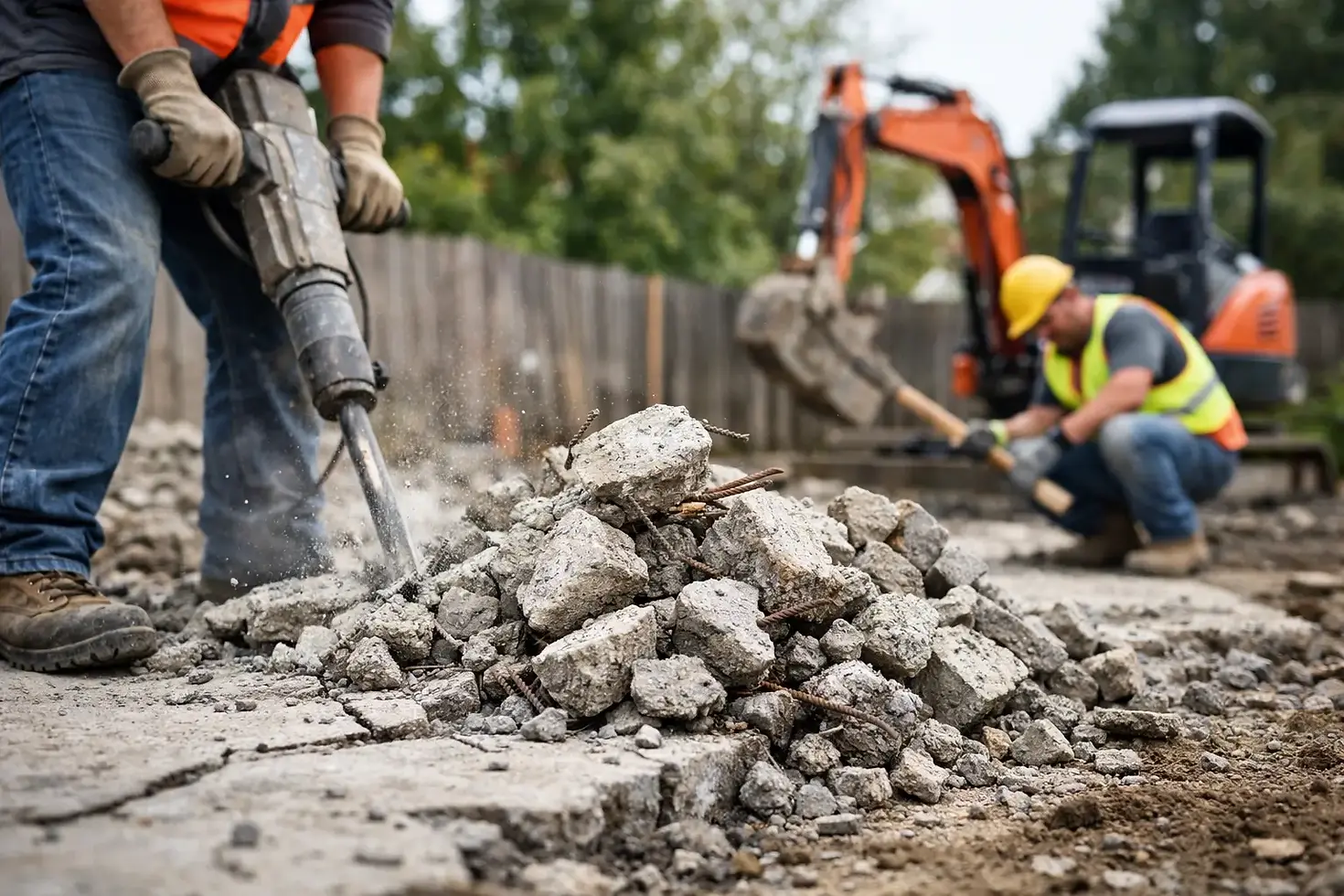
How to Remove Old Concrete Safely and Properly
A cracked driveway or tired concrete path can look like a straightforward demolition job until the first break exposes buried services, thick reinforcement or unstable ground underneath. Knowing how to remove old concrete properly helps you plan the work, protect the site and avoid paying twice for disposal, repairs or a failed replacement slab.
For small, isolated pieces of thin concrete, careful hand demolition may be suitable. For driveways, house slabs, shed floors, retaining structures and commercial hardstands, machinery and an experienced operator are generally the safer and more efficient option. The right approach depends on the concrete thickness, steel content, access, neighbouring structures and what the site needs next.
Start by assessing the concrete and the site
Before any concrete is broken, establish exactly what you are removing. A plain garden path may be 75 mm thick with no reinforcement. An older driveway is often 100 mm or more, while slabs built for sheds, garages or heavy vehicles may be substantially thicker and reinforced with mesh, bar or thickened edges.
Check for cracks, movement, drainage problems and changes in level. These details matter because demolition should not simply remove the visible concrete. If the base underneath is soft, washed out or poorly compacted, it will need to be addressed before a new driveway, slab or landscape area is installed.
Access also shapes the method. A machine can remove concrete quickly where there is room for a skid steer, excavator, tipper and crushing or loading area. Tight side access, established gardens, fences and overhead lines may require smaller equipment, more labour and a staged removal plan.
Most importantly, identify underground and overhead services before work begins. Electrical cables, water, sewer, stormwater, gas and communications can run under or close to concrete. Arrange relevant service information and use careful excavation around known service locations. Do not assume an old slab is clear simply because no services are visible above ground.
How to remove old concrete: choose the right method
There is no one-size-fits-all demolition method. Using too little equipment makes the job slow and physically demanding. Using machinery that is too large for the site can damage surrounding ground, fences, kerbs or buildings. A practical demolition plan matches the method to the structure and the finished result required.
Hand tools for small, light-duty sections
A demolition hammer, sledgehammer and crowbar can work for a small concrete pad, thin path or isolated repair section. The concrete should be broken into manageable pieces, beginning at an exposed edge where possible. Cutting a clean line with a concrete saw first can help prevent cracking from travelling into concrete that is staying in place.
This method is labour-intensive and creates significant dust, noise and vibration. It is not a good fit for a full driveway or a reinforced slab. It also becomes risky when people try to lift large broken pieces without suitable equipment.
Saw cutting where accuracy matters
Concrete saw cutting is useful when only part of a slab needs to come out, such as a damaged driveway bay, a section around a new drainage line or an extension to an existing structure. A clean cut protects the remaining concrete and gives the replacement work a defined edge.
Saw cutting should be planned around steel reinforcement, service locations and dust control. Wet cutting can reduce airborne dust, but it also creates slurry that must be managed rather than allowed to run into drains or across neighbouring property.
Excavators and attachments for larger demolition
For larger slabs, driveways and hardstands, an excavator with the correct attachment is usually the most efficient solution. Hydraulic hammers can break up heavy concrete, while buckets and grabs can lift, sort and load material. A skid steer may then be used to clean up smaller fragments and prepare the exposed ground.
The operator needs to work progressively, particularly near buildings, footings, pools, retaining walls and service trenches. Breaking concrete is only part of the job. Controlled lifting, loading and final trimming are what keep the site safe and ready for the next stage.
Work safely before breaking the first section
Concrete demolition produces sharp fragments, silica dust, high noise levels and vibration. Suitable personal protective equipment includes safety glasses, hearing protection, gloves, steel-capped boots, long sleeves and a properly fitted respiratory mask rated for silica dust. Keep children, pets, vehicles and unnecessary workers clear of the work zone.
Water suppression is often needed while cutting or breaking concrete, especially in dry NSW conditions. It reduces dust but should be used carefully to avoid creating slippery surfaces, muddy access or contaminated runoff. Where machinery is operating, establish exclusion zones and never stand under a raised load or close to a hydraulic attachment.
Reinforcement needs special attention. Mesh and reo bar can spring, snag on equipment and leave sharp exposed ends. It should be cut and handled in controlled lengths, then separated from the concrete where practical for recycling.
If the concrete forms part of a building, retaining wall, suspended slab, pool surround or structural footing, do not treat it as general demolition. Removing the wrong section can affect structural support, drainage or waterproofing. Seek professional advice before work starts.
Remove, sort and dispose of the concrete properly
Broken concrete is heavy. One cubic metre can weigh more than two tonnes, so disposal logistics should be arranged before demolition begins. Leaving piles of rubble around a site can block access, damage lawns and make it harder to inspect the subgrade underneath.
Concrete is commonly accepted for recycling, where it can be processed into reusable aggregate or road base. Clean concrete is easier and more cost-effective to recycle than material mixed with soil, timber, plastic, general rubbish or excessive vegetation. Separate steel reinforcement, timber formwork and other demolition waste as the job progresses.
For a larger project, loading material directly into a tipper or skip can keep the site orderly. The right option depends on access, volume and whether machinery is already on site. A small trailer may suit a few pieces of path, but it is rarely efficient for a full driveway removal and can be overloaded quickly.
Prepare the ground for what comes next
Removing old concrete exposes the real condition of the site. This is the point to correct falls, repair drainage, remove unsuitable material and compact a proper base. Skipping this work is a common reason new concrete cracks, settles or holds water prematurely.
If a new slab or driveway is planned, the excavated area should be trimmed to the required depth and shaped to direct water away from buildings. Base material needs to be placed and compacted in suitable layers, not simply spread over soft or uneven ground. The required depth, reinforcement and finish will vary according to vehicle loads, soil conditions, drainage and the intended use.
Where the old concrete is being replaced by turf, gravel, landscaping or a new access route, the site may need imported topsoil, geotextile, drainage rock or additional excavation. Planning the end use before demolition prevents unnecessary double handling of material.
When it makes sense to bring in a contractor
Professional removal is often the practical choice where concrete is reinforced, access is limited, services are nearby or the project includes excavation and replacement works. It is also worthwhile when timing matters. A contractor with the right fleet can break up the slab, load out material, prepare the base and coordinate the next construction stage without multiple trades working around each other.
For property owners, builders and rural clients across the Shoalhaven and Illawarra, Coffey Civil can manage concrete demolition as part of a broader site preparation or civil works scope. This is particularly useful when the job involves new drainage, earthworks, retaining work, a driveway upgrade or a replacement concrete pour.
Old concrete removal is not just about getting rubble off the block. A controlled demolition, clean disposal plan and properly prepared base give the next stage of your project a sound place to start.

Comments