
Choosing Concrete Slab Contractors in NSW
A concrete slab can look simple once it is poured, but anyone who has dealt with cracking, drainage issues or delays knows the hard part happens well before the concrete truck arrives. Choosing the right concrete slab contractors matters because the slab sets the standard for everything built on top of it, from a house and shed to a driveway, workshop or commercial structure.
For property owners, builders and developers across regional and coastal NSW, the difference usually comes down to preparation, equipment and accountability. A contractor who can cut, fill, compact, form, reinforce and pour as one coordinated scope will generally deliver a better result than a patchwork approach where multiple trades are trying to line up on the run. That is especially true on sites with poor access, fall across the block, reactive soils or changing ground conditions.
What good concrete slab contractors actually do
The job is not just pouring concrete into a boxed-out area. A proper slab contractor looks at the entire build-up below and around the slab, because long-term performance depends on what cannot be seen once the job is finished.
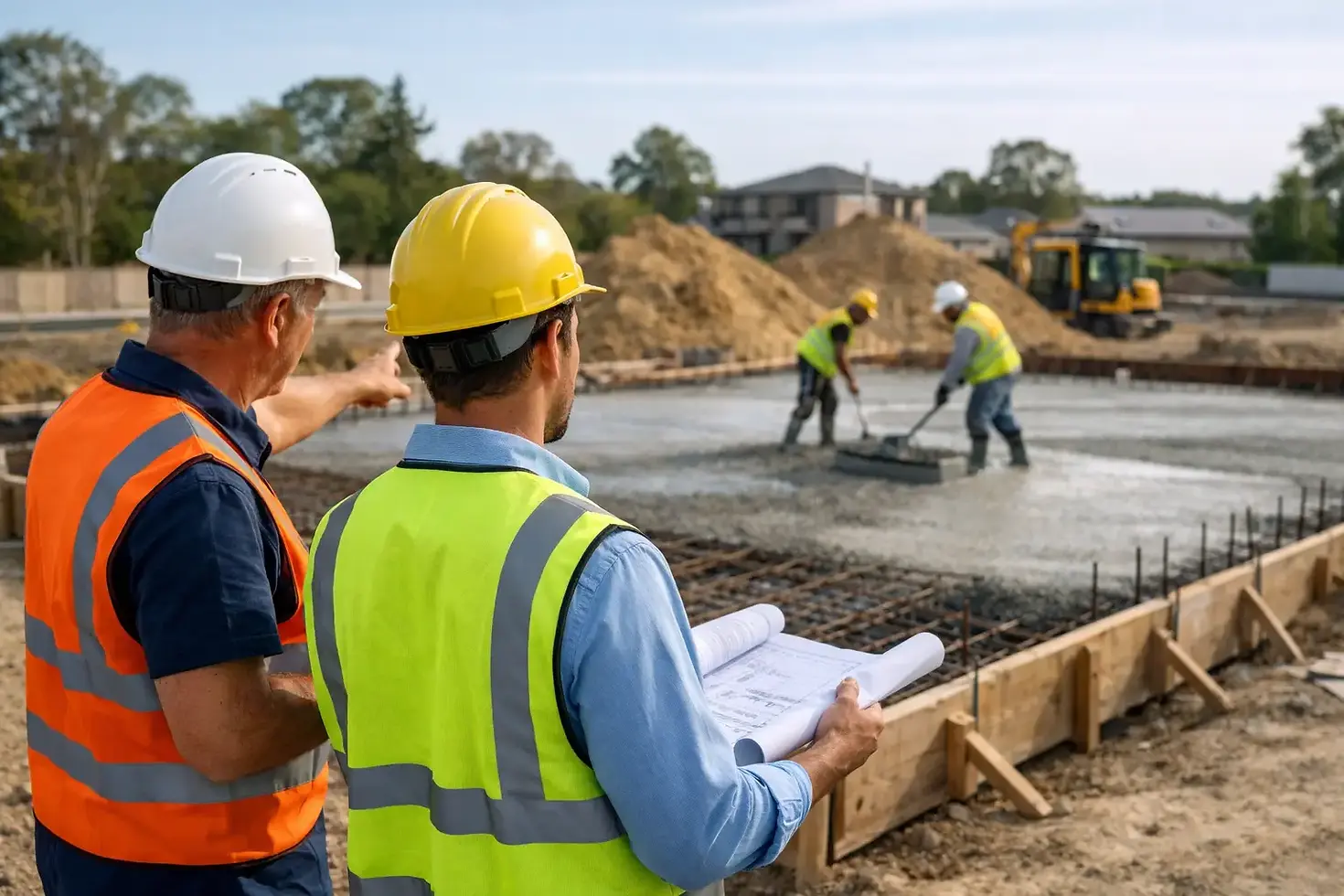
That starts with site preparation. The ground needs to be stripped, trimmed and brought to the right levels. Soft spots need to be identified early, not ignored and covered over. Imported fill, if required, needs to be placed and compacted correctly. If drainage is part of the design, it has to be considered before the pour, not after water starts pooling around the finished slab.
From there, formwork, reinforcement, set-outs and concrete placement all need to be handled with care. Even a small slab can go wrong if the levels are off, the base is uneven or the concrete is rushed in poor weather. On larger or structural work, those small mistakes become expensive defects.
Why site preparation matters more than most people think
A slab is only as good as the ground beneath it. That is not a slogan. It is the reason some slabs stay stable for years while others show movement early.
On residential blocks, problems often start with inconsistent fill, water sitting under the pad, or inadequate compaction around service trenches. On rural sites, the challenge may be access, slope, soft ground after rain or the need to tie the slab into broader earthworks. On commercial and light civil projects, the issue can be traffic loading, tighter tolerances or staged construction.
This is where experience in excavation and earthmoving gives a contractor an edge. If the same team understands cut and fill, subgrade preparation, machinery access and concrete works, the whole project is easier to manage. There is less finger-pointing, fewer handover gaps and better control over programme and quality.
Not all slabs are the same
One of the biggest mistakes clients make is treating every slab like a standard house pad. In practice, slab design and construction depend on the purpose of the structure, the site conditions and the finish required.
A house slab has different demands from a shed slab. A driveway slab needs to deal with vehicle traffic, edge durability and drainage. A machinery shed or workshop may need thicker sections, stronger reinforcement or a finish suitable for equipment. If the slab is supporting retaining wall elements, columns or other structural features, accuracy becomes even more important.
That is why a good contractor asks questions early. What is being built? What loads will the slab carry? What are the soil conditions? Is there a geotechnical recommendation? Are there service penetrations, step-downs or adjoining structures to allow for? Those details shape the method, materials and timeframe.
How to assess concrete slab contractors
Price matters, but it should not be the only filter. A cheap quote can become an expensive fix if corners are cut on excavation, compaction or reinforcement. When comparing contractors, look at their ability to manage the whole job, not just the visible pour day.
A capable contractor should be clear about scope. That includes excavation, spoil removal, imported material, compaction, formwork, steel fixing, concrete supply, pump access, finishing and clean-up. If part of that scope is excluded, it should be obvious in the quote. Vague pricing usually leads to variation disputes later.
It also helps to ask what plant and labour they actually control. Contractors with their own machinery and operators are often better placed to adapt when site conditions change. If wet weather, unsuitable material or access issues arise, they can usually respond faster than crews relying on hired-in support for every stage.
Communication is another strong indicator. A reliable slab contractor should explain what needs to happen, flag likely issues early and give realistic timing. Straight answers are worth a lot on active projects.
Common problems that lead to slab failures
Most slab issues are not caused by one dramatic mistake. They come from a chain of smaller problems that were missed or ignored.
Poor compaction is a major one. If the base is not prepared properly, movement can occur over time and show up as cracking or uneven settlement. Inadequate drainage is another. Water around or beneath the slab can soften supporting soils and create instability, especially on reactive sites.
Set-out errors also cause trouble. If levels are wrong, adjoining works such as footpaths, garages, retaining walls or framing may not tie in properly. Reinforcement placement matters too. Steel that is not positioned correctly cannot do the job it was designed to do.
Then there is timing. Concrete work is weather-sensitive, and rushing a pour in poor conditions can affect finish quality and curing. A contractor who takes a practical view of weather, access and sequencing is generally protecting the project, not slowing it down.
The value of an end-to-end contractor
For many clients, the best outcome comes from engaging a contractor who can handle more than the slab itself. When excavation, site preparation, drainage, retaining works and concrete are coordinated by one team, the project tends to move with fewer delays and fewer surprises.
That approach is particularly useful on rural and residential sites where the scope often changes once work starts. A block may need more cut than expected. Access may need improvement before concrete trucks can get in. Ground conditions may call for extra preparation. If the contractor has the machinery, operators and practical project management to adjust, the job stays under control.
That is where a hands-on civil contractor can add real value. Coffey Civil works across excavation, site prep, concrete and related civil works, which makes it easier to keep the moving parts aligned from start to finish.
Questions worth asking before you commit
Before signing off on a slab contractor, it is worth having a direct conversation about a few basics. Ask who is managing the work on site and whether the quoted scope includes excavation and base preparation. Confirm how levels will be checked, what happens if unsuitable ground is found, and whether access has been properly considered for machinery and concrete delivery.
You should also ask about curing, finishing and programme. A slab can be structurally sound but still fall short if the surface finish is poor or the timing is unrealistic. Good contractors will not overpromise on conditions they cannot control. They will explain where the risks are and how they plan to manage them.
Choosing for value, not just price
The right contractor is rarely the one who simply comes in cheapest. The better measure is value across the full job: preparation, workmanship, coordination and the ability to deal with issues without derailing the project.
For homeowners, that means confidence the slab under the house, shed or driveway is built on solid ground. For builders and developers, it means fewer programme headaches and cleaner handovers to the next trade. For rural and commercial clients, it means a practical crew that understands access, machinery and the demands of working on live sites.
Concrete slabs do not leave much room for rework once they are down. Getting the contractor choice right at the start saves time, cost and frustration later.
If you are comparing concrete slab contractors, look past the pour and focus on the groundwork, the equipment and the people standing behind the job. That is usually where the real quality shows.

Comments